
Developer notes: Integrating the Xtreme HD IPTV API and playlists for reliable Live TV and VOD delivery

As streaming architectures evolve, API-based integrations are essential for delivering smooth live TV and VOD experiences. This guide breaks down the Xtreme HD IPTV API—covering authentication, playlist handling, and integration patterns—so developers can build reliable streaming apps. You’ll learn how to authenticate, manage playlists, and apply best practices for subscription and access control. Mastering these areas helps you keep streams stable and users engaged as demand for high-quality content grows.
For a broader technical background on IPTV systems—architecture, delivery methods, and security—there are comprehensive surveys and studies available.
IPTV Architecture, Content Delivery & Security Survey
This paper reviews core IPTV research areas. It outlines common service architectures and diagnostic approaches, then surveys encoding techniques that can support future IPTV, including Scalable Video Coding. Distribution strategies—such as peer-to-peer and Content Delivery Networks—are evaluated, followed by an examination of major security and privacy challenges.
A survey on recent advances in iptv, M Halloush, 2016
Key takeaways
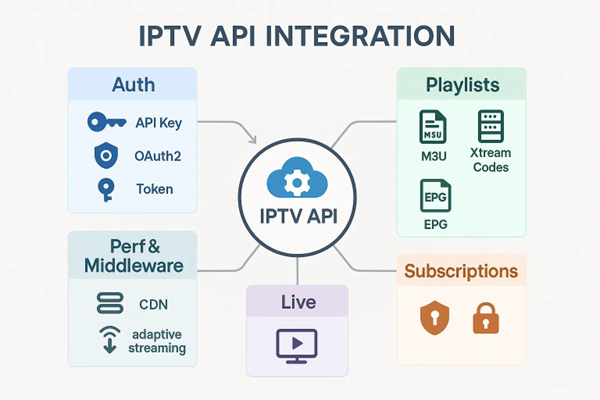
- The Xtreme HD IPTV API makes it straightforward to integrate live TV and VOD through secure, production-ready endpoints.
- Supported authentication includes API keys, OAuth 2.0, and token-based flows to protect user sessions.
- Playlists can be managed with common formats such as M3U, the Xtream Codes API, and EPG data.
- API-driven playlist updates let you push dynamic channel and VOD changes without client installs.
- Primary endpoints like /live, /stream, and /epg handle channel lists, stream URLs, and program guides.
- Subscription and access-control features let you gate content by user tier or entitlement.
- API key best practices: keep keys secret, rotate regularly, and monitor usage to detect abuse.
- Middleware is useful for content aggregation, EPG normalization, and dynamic playlist generation.
- Use adaptive streaming, CDNs, and monitoring to maintain consistent, high-quality playback.
How to authenticate and access the Xtreme HD IPTV API?
Authentication is the first step to using the Xtreme HD IPTV API. Proper authentication ensures only authorized clients can request streams and metadata, and it protects user accounts and content. The API supports multiple authentication patterns so you can choose the one that best fits your architecture and security requirements. Once authenticated, your application can safely call endpoints for channel listings, stream URLs, and VOD assets.
For developers, the API unlocks secure access to a broad catalog of channels and on-demand titles, enabling apps that are both flexible and resilient.
What authentication methods does the IPTV API support?

The Xtreme HD IPTV API supports multiple secure authentication options to fit different use cases. Commonly used methods include:
- API key authentication: Include a unique API key with each request to identify the client and its permissions.
- OAuth 2.0: Use OAuth flows for third-party sign-ins and delegated access with token refresh capabilities.
- Token-based authentication: Issue short-lived tokens after login; include them in subsequent requests to maintain session security.
Choosing the right method depends on your app’s architecture and security needs. Proper implementation prevents unauthorized access and protects subscriber data.
Strong authentication is a foundational defense for IPTV platforms—numerous studies explore advanced and hybrid authentication models for secure deployments.
Secure IPTV User Authentication Protocols
Secure access is critical for IPTV. Without robust authentication, attackers could impersonate subscribers and steal service. This paper proposes a hybrid, lightweight authentication protocol for mobile IPTV that blends RFID and USIM-based techniques to provide personalized, efficient user verification.
A hybrid user authentication protocol for mobile IPTV service, SS Yeo, 2013
How to obtain and use API keys for live TV and VOD streaming?
Getting and using API keys with the Xtreme HD IPTV API is straightforward:
- Sign up: Create an account on the Xtreme HD IPTV platform to request API access.
- Generate an API key: From the dashboard, create a unique key tied to your application or environment.
- Include the key in requests: Send the API key in the request header (or as documented) with each API call to authenticate.
Treat API keys like credentials: keep them private, rotate them on a schedule, and monitor usage for anomalies. Common issues include expired keys, incorrect header placement, or missing scopes—verify these when debugging access failures.
Which playlist formats does Xtreme HD IPTV support, and how do you manage them?

Xtreme HD IPTV accepts several playlist formats so you can integrate channels and EPG data cleanly. Understanding each format helps ensure compatibility and a smooth playback experience.
Supported playlist formats
The API supports these common formats:
| Format | Description | Use case |
| M3U | Standard plaintext playlist format listing stream URLs and metadata | Simple live channel lists and client-side playback |
| Xtream Codes API | API-driven format with extended metadata and control features | Advanced IPTV setups that require channel management and user entitlements |
| EPG | Structured program guide data for scheduling and program metadata | Displaying program schedules and enabling DVR-like features |
These formats let you build responsive, updatable channel lists and program guides inside your apps.
Middleware often sits between content sources and clients to normalize playlists, serve EPG, and enable features like dynamic channel mapping.
IPTV Middleware Integration for Content Management
This thesis discusses migrating broadcast services from satellite to IPTV, with a focus on middleware for EPG and content management. The project required middleware analysis and training on existing frameworks (WWAF) to implement IPTV features with minimal system changes. The result demonstrates how middleware can enable EPG and other IPTV services for broadcasters.
IPTV implementation for television broadcaster, 2015
How to dynamically update IPTV playlists using the API?
Use the playlist management endpoints to keep channel lists and VOD catalogs current. Typical operations include creating, updating, and deleting playlist entries via authenticated API calls. Push updates from your backend so clients fetch the latest playlist or subscribe to webhook notifications for real-time changes. This is essential for live channels that change frequently or for rotating VOD catalogs.
How to integrate live TV channels and VOD content via the API?
Integrating live and on-demand content follows a clear flow: authenticate, fetch catalog data, and stream content. Typical steps include:
- Set up API access: Ensure your application is authenticated and has required scopes.
- Fetch channel and VOD metadata: Retrieve lists, thumbnails, and metadata from the API.
- Implement streaming: Use stream endpoints to obtain playback URLs and integrate a player that supports adaptive streaming.
Following these steps gives users seamless access to both live broadcasts and on-demand titles in a unified interface.
Which API endpoints enable live TV channel streaming?
Key endpoints typically used for live streaming include:
- /live: Returns the available live channel catalog and metadata.
- /stream: Provides the stream URL or manifest for a selected channel.
- /epg: Delivers Electronic Program Guide data for current and upcoming shows.
Combining these endpoints allows you to list channels, display program guides, and start playback reliably.
How to access and manage VOD playlists through the IPTV API?
VOD management is similar to live content but focuses on titles and playlists. Typical tasks include:
- Fetch VOD catalog: Call the VOD endpoints to list available movies and shows.
- Manage playlists: Create or modify user or curated playlists via API calls.
- Integrate UI: Build a browsing interface that surfaces metadata, thumbnails, and play buttons.
Effective VOD management improves discovery and keeps viewers engaged with relevant content.
What subscription and access control features are available in the IPTV API?
The API includes features to manage subscriptions and enforce access control, ensuring only entitled users can view premium content. Typical features include:
- Subscription management: Track user plans, expiry, and entitlements.
- Access control: Restrict streams and VOD based on subscription level or user role.
- Usage monitoring: Log API calls and playback activity to detect misuse.
These controls help protect content revenue and enforce licensing agreements.
How to implement subscription validation and access control via API?
Implement subscription and access checks with a three-step approach:
- Authenticate users: Require valid credentials or tokens before granting access.
- Verify subscription: Check the user’s subscription status and entitlements in your backend.
- Enforce policies: Apply access rules at the API or middleware layer to block unauthorized playback.
This flow ensures that only eligible users can access protected channels and VOD.
What are the best practices for managing user subscriptions and API usage?
Keep subscriptions and API usage healthy with these practices:
- Regular audits: Periodically review subscription records and entitlements.
- Usage limits: Apply rate limits and concurrent stream caps to prevent abuse.
- User notifications: Notify users about renewals, expirations, and changes to their plan.
Proactive management reduces disputes, prevents fraud, and keeps your service stable.
Frequently asked questions
What benefits does the Xtreme HD IPTV API offer developers?
The API gives developers reliable, programmatic access to live channels and VOD content, along with robust authentication and playlist support. That enables faster integration, richer user experiences, and better control over streaming behavior—helping you build apps that scale and retain viewers.
How does the Xtreme HD IPTV API handle authentication and access control?
The API supports API keys, OAuth 2.0, and token-based authentication. Combined with subscription checks and role-based controls, these methods help ensure only authorized users access premium streams and VOD content, protecting both user data and content licensing.
What should developers consider when managing IPTV playlists?
Prioritize compatibility (M3U, Xtream Codes, EPG), support for dynamic updates, and a UI that makes channel discovery easy. Regularly validate playlists and run performance checks to keep the experience consistent across devices.
How can developers troubleshoot common IPTV API integration issues?
Start by verifying credentials and header formats, then examine API responses and error codes. Monitor response times to find bottlenecks, reproduce calls with tools like Postman, and consult logs. If issues persist, use vendor support or community channels for guidance.
What role does middleware play in IPTV integrations?
Middleware bridges content sources and client apps: it normalizes playlists, serves EPG data, enforces access control, and can add caching or personalization. It simplifies client logic and centralizes content management.
How do you ensure high-quality streaming with IPTV APIs?
Use adaptive bitrate streaming, deliver media via CDNs, and monitor QoS metrics. Optimize encodings for common devices, cache frequently requested assets, and respond to user feedback to continuously improve playback quality.
What common challenges do developers face when integrating IPTV APIs?
Typical challenges include authentication complexity, device compatibility, dynamic content updates, and handling regional licensing. Thorough testing, clear error handling, and robust monitoring help mitigate these issues.
How can developers protect user data with IPTV APIs?
Use HTTPS for all traffic, implement secure authentication flows (OAuth or short-lived tokens), regularly patch systems, and run security audits and penetration tests. Limit data exposure and log access for incident response.
What tools help test IPTV API integrations?
Postman and Swagger are useful for endpoint testing and documentation. Use JMeter or similar tools for load testing, and monitor in production with tools like New Relic or Loggly to capture real-world performance and errors.
How can developers optimize IPTV application performance?
Optimize data access patterns, implement caching, and use adaptive streaming. Monitor API response times, tune database queries, and offload static assets to CDNs to reduce latency and improve user experience.
What should developers consider when using third-party authentication services?
Third-party auth can simplify implementation and improve security, but it introduces external dependencies. Validate the provider’s reliability, compliance with data regulations, and contingency plans for outages before integrating.
What trends are shaping the future of IPTV APIs?
Expect more personalization via AI/ML, deeper analytics for content optimization, broader 5G adoption for low-latency streaming, and stronger cross-platform interoperability to reach users on any device.
Conclusion
Integrating the Xtreme HD IPTV API enables developers to deliver reliable live TV and VOD experiences by combining solid authentication, flexible playlist support, and dynamic update capabilities. Apply the recommended practices for keys, middleware, and streaming infrastructure to keep playback smooth and secure. Explore the API and documentation to accelerate your IPTV development and improve viewer engagement.

In the digital age, the way we consume television and media has undergone a significant transformation, and Internet Protocol Television Read more

The landscape of the streaming industry has changed dramatically in recent years, with several players vying for dominance. Typhoon IPTV Read more

How to jailbreak a Chromebook? Chromebooks have gained popularity as lightweight, efficient, and affordable devices that provide seamless integration with Read more

Kemo IPTV is a popular IPTV service provider that delivers television programs and other video content to your device. The Read more