
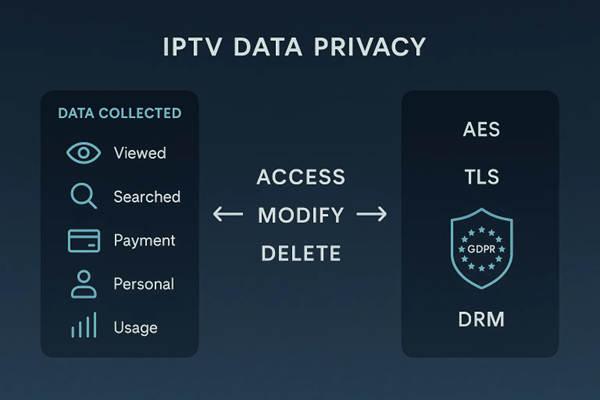
A practical guide to how IPTV providers collect, store, and protect user data. We break down the kinds of information gathered, why some data is necessary to deliver services, and the security and compliance steps providers should take. With growing demand for transparency, this resource helps viewers understand their rights and what to expect from a trustworthy IPTV service.

In today’s connected world, how providers handle personal information is increasingly important. This guide explains IPTV data retention and privacy practices in clear terms: what data is collected, how providers use it, and what safeguards protect users. We also cover legal obligations and practical steps subscribers can take to control their information. By the end, you’ll know your rights and what responsible providers—including Xtreme HD IPTV—should be doing to protect subscriber data.
Key Takeaways
- IPTV platforms collect data such as viewing habits, search queries, payment details, and basic account information.
- Data essential for service delivery includes viewing history, searches, usage patterns, and billing details.
- Providers use subscriber data to personalize experiences while applying security controls and transparent privacy policies.
- Data retention policies align with legal requirements and define what’s collected and how long it’s stored.
- Common protections include AES encryption, SSL/TLS for connections, and DRM systems to secure content.
- Providers reduce breach risk with firewalls, intrusion detection, strong authentication, and routine security checks.
- Subscribers have rights to access, correct, and request deletion of their personal data.
- IPTV providers must meet legal obligations and industry best practices to keep subscriber data safe.
- Transparency and adherence to regulations like GDPR build trust between providers and users.
What Types of User Data Do IPTV Services Collect?

IPTV providers gather several kinds of information to run and improve their services. Typical categories include:
- Viewing Habits: What users watch—genres, channels, and specific titles—to inform recommendations and content planning.
- Search Queries: Searches performed inside the service to sharpen discovery and search results.
- Payment Information: Billing and payment details required to process subscriptions and transactions securely.
- Personal Details: Basic account information such as name, email, and contact number for account setup and support.
- Usage Patterns: Metrics on when and how often users stream content to help optimize performance and capacity.
Knowing what’s collected helps users evaluate privacy risks and make informed choices about their IPTV provider.
Which IPTV User Data Is Essential for Service Delivery?
Some data is required to deliver a smooth, personalized IPTV experience. The most important pieces are:
- Viewing Histories: Used for tailored recommendations and resuming playbacks.
- Search Queries: Improve search relevance and content suggestions.
- Usage Patterns: Help balance load, improve streaming quality, and plan capacity.
- Payment Information: Required for billing, renewals, and fraud prevention.
Providers are increasingly adopting privacy-preserving techniques so personalization can happen without exposing sensitive user preferences.
IPTV Privacy: Protecting User Data in Recommender Systems
This study describes an agent-based middleware (AMPR) that lets users benefit from IPTV recommendation services without exposing sensitive preference data to providers or third parties. AMPR aims to preserve privacy while enabling controlled sharing of data among users in the network.
Multi-agent based middleware for protecting privacy in IPTV content recommender services, AM Elmisery, 2013
When used responsibly, this kind of data helps providers enhance service delivery while minimizing privacy risks.
How Is Subscriber Data Used and Managed?
IPTV providers use subscriber data to improve user experience, secure services, and support operations. Typical practices include:
- Data Analysis for Service Improvement: Aggregated insights guide content decisions, UX tweaks, and feature development.
- Security Controls: Encryption, access controls, and monitoring protect data from unauthorized access.
- Clear Privacy Policies: Providers publish policies explaining what data they collect, why, and how it’s protected to build user trust.
Xtreme HD IPTV, like reputable providers, focuses on safeguarding user data while using anonymized insights to enhance streaming and recommendations.
How Do IPTV Providers Implement Data Retention Policies?
Data retention policies set the rules for what data is stored and for how long. Key elements include:
- Regulatory Alignment: Following local and international laws that dictate retention limits and user rights.
- Collection Limits: Defining the minimum data needed for service delivery and limiting unnecessary collection.
- Storage Protections: Applying encryption and strict access controls to stored data.
These policies ensure providers balance operational needs with legal and ethical responsibilities.
What Are Typical IPTV Data Storage Periods and Policies?
Storage durations vary by data type and legal requirements. Common practices are:
- Defined Retention Windows: Data may be kept from several months to a few years depending on purpose and regulation.
- Legal Compliance: Providers follow standards like GDPR that require keeping personal data only as long as it’s necessary.
Understanding retention practices helps subscribers assess how long their information may be retained and why.
How Do IPTV Services Ensure Compliance with Privacy Regulations?
Compliance is a combination of policies, processes, and technical controls. Providers typically:
- Follow Data Protection Laws: Align operations with regulations that govern data use and user rights.
- Respect User Rights: Provide mechanisms for users to access, correct, or delete their data.
- Maintain Security Standards: Use recognized security measures to reduce the risk of breaches and remain auditable.
These steps are essential to meet legal obligations and maintain user trust.
What Privacy and Security Measures Protect IPTV Subscriber Data?

Effective IPTV security programs combine technical and user-focused measures, such as:
- Encryption and Secure Storage: Encrypting data at rest and in transit to prevent interception.
- Secure Payment Handling: Using PCI-compliant processors and tokenization to protect billing data.
- Account Protections: Encouraging strong passwords, offering two-factor authentication, and monitoring for suspicious activity.
Together, these controls reduce exposure and help maintain subscriber privacy.
Which Encryption Methods Secure IPTV Streaming and Data?
Encryption and rights-management technologies commonly used in IPTV include:
- AES (Advanced Encryption Standard): Standard for encrypting data to keep streams and stored data confidential.
- SSL/TLS: Secures connections between devices and servers to prevent eavesdropping.
- DRM (Digital Rights Management): Controls access to content so only authorized subscribers can view licensed media.
These techniques form the backbone of secure streaming and content protection.
How Do IPTV Providers Prevent Data Breaches and Unauthorized Access?
Preventing breaches requires layered defenses and regular maintenance. Common practices include:
- Network Security: Firewalls, IDS/IPS, and segmented networks to block and detect intrusions.
- User Authentication: Strong password policies, multi-factor authentication, and session management.
- Continuous Auditing: Regular security reviews, vulnerability scans, and penetration testing to find and fix weaknesses.
Proactive monitoring and timely patching are critical to reducing breach risk.
What Rights Do IPTV Subscribers Have Regarding Their Data?
Subscribers typically have several rights that empower them to control their information:
- Access: Request copies of personal data held by the provider.
- Correction: Update or correct inaccurate personal details.
- Deletion: Request removal of personal data when it’s no longer necessary or when law permits.
Knowing these rights helps users take charge of their privacy.
How Can Subscribers Access, Modify, or Delete Their Data?
Providers usually offer straightforward ways for subscribers to manage their data:
- Access Requests: Submit a request via customer support or a dedicated privacy portal to receive your data.
- Edit Profiles: Use account settings to update personal information directly.
- Deletion Requests: Follow the provider’s data deletion process, which should comply with applicable laws and timelines.
Clear procedures and timely responses are hallmarks of a privacy-respectful provider.
What Are IPTV Providers’ Responsibilities for Subscriber Data Protection?
Providers must act responsibly to protect subscriber data. Their duties include:
- Legal Compliance: Adhering to data protection laws and regulatory requirements.
- Best-Practice Data Handling: Minimizing collection, securing storage, and limiting access to necessary personnel.
- Policy and Process Updates: Keeping practices up to date with legal and technological changes.
Fulfilling these responsibilities helps providers maintain trust and reduce liability.
Frequently Asked Questions
What should I look for in an IPTV provider regarding data privacy?
Choose providers with clear, easy-to-find privacy policies that explain what they collect and why. Look for concrete security practices—encryption, secure payment processors, and options for two-factor authentication. Providers that explicitly state compliance with regulations like GDPR and offer clear data-management controls demonstrate a stronger commitment to privacy.
How can I ensure my data is secure while using IPTV services?
Use a strong, unique password and enable two-factor authentication when available. Keep your apps and devices updated, and consider using a reputable VPN for an extra layer of network encryption. Review your provider’s security practices and limit the personal information you share when possible.
What steps can I take if I believe my data has been compromised?
If you suspect a breach, immediately change your passwords and notify the IPTV provider. Monitor financial accounts for suspicious activity and contact your bank if you see unauthorized charges. Depending on the severity, consider placing a fraud alert with credit agencies and follow any instructions the provider gives for incident response.
Are there any risks associated with using free IPTV services?
Free IPTV offerings can carry higher privacy and security risks. They may lack robust protections, use invasive tracking, or monetize user data. Free services are also more likely to be opaque about data handling. When privacy matters, prioritize reputable, paid providers that publish clear privacy and security practices.
How do I know if my IPTV provider is compliant with data protection laws?
Review the provider’s privacy policy for references to regulations like GDPR or CCPA and check for information about data subject rights. Reputable providers may publish audit reports or certifications. If in doubt, contact support to ask how they handle data subject requests and what controls are in place.
What should I do if I want to change my IPTV subscription due to privacy concerns?
Review your current provider’s cancellation and data-deletion policies so you can close your account cleanly. Research alternatives that prioritize privacy—look for transparent policies, strong security measures, and positive user feedback. When switching, ensure any personal data with the old provider is removed or transferred securely.
Conclusion
Understanding how IPTV services collect, retain, and protect user data helps you make smarter choices. Prioritize providers that combine transparency, strong security, and legal compliance—these are the services that respect your privacy. If privacy matters to you, choose a provider that clearly explains its practices and gives you control over your data. Stay informed and proactive about your streaming privacy.

In the digital age, the way we consume television and media has undergone a significant transformation, and Internet Protocol Television Read more

The landscape of the streaming industry has changed dramatically in recent years, with several players vying for dominance. Typhoon IPTV Read more

How to jailbreak a Chromebook? Chromebooks have gained popularity as lightweight, efficient, and affordable devices that provide seamless integration with Read more

Kemo IPTV is a popular IPTV service provider that delivers television programs and other video content to your device. The Read more