
Global IPTV Market: What to Expect from Subscription Trends and Technology Innovations

The global IPTV market is shifting fast. Demand for diverse, on‑demand content and steady tech improvements are driving subscriber growth from 2024 through 2026. For providers, platform partners, and viewers alike, understanding subscription patterns and the technology behind them is key. This article breaks down the trends, the tech pushing change, and the regional differences that will shape IPTV’s next phase.
Key Takeaways
- Global IPTV is expanding quickly—consumer demand and tech progress are the main drivers through 2026.
- Subscription gains are strongest among younger users and in urban markets with reliable broadband and high smart‑TV ownership.
- Telco and streaming partnerships make IPTV bundles more attractive and simplify the user experience.
- AI and interactive features are making recommendations tighter and increasing viewer engagement.
- Better CDNs and delivery tech cut latency and raise streaming quality, boosting platform competitiveness.
- Local infrastructure and regulation create wide regional differences in adoption and growth rates.
- Viewers favor flexible plans—mixing ad‑supported tiers with premium, ad‑free options.
- Original and exclusive content remains a top lever for attracting and holding subscribers.
- Regulation and competition are challenges; ongoing innovation is essential for providers to stay relevant.
What Are the Current IPTV Subscription Trends Worldwide?
IPTV subscriptions are rising as viewers move toward streaming-first habits. Faster home internet and more smart devices make subscription models easy and appealing. These shifts mark a broader change in how audiences discover and watch shows and live content.
How Has IPTV Subscription Growth Evolved from 2024 to 2026?
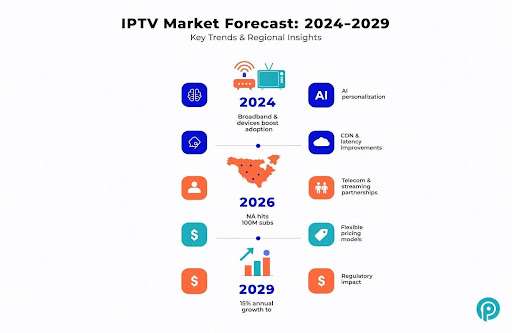
Between 2024 and 2026, IPTV subscriptions are on an upward path. Improvements in network capacity and reliability have lowered the barriers to entry. Current estimates point to roughly a 20% increase in global IPTV subscribers over this period—clear evidence that viewing habits are changing.
Which Consumer Demographics Drive IPTV Adoption?

Younger adults (18–34) lead adoption thanks to their comfort with streaming and subscription services. Older demographics are catching up as targeted content becomes more accessible. Geography matters too: urban areas with strong broadband penetration tend to show higher IPTV uptake.
How Is the Global Streaming Service Market Shaping IPTV Expansion?
The broader streaming ecosystem feeds IPTV growth. As households layer multiple streaming services into their media mix, IPTV benefits from platform interoperability and the convenience of consolidated access.
What Roles Do Telecom Operators and Streaming Platforms Play in Market Growth?
Partnerships between telcos and streaming platforms are a key growth engine. Bundles, co‑marketing and integrated billing make it easier for consumers to subscribe and reduce churn by offering a smoother overall experience.
How Do Broadband Penetration and Smart TV Adoption Affect IPTV Subscriptions?
Broadband access and smart‑TV ownership are fundamental. Where households have reliable high‑speed internet and modern TVs, IPTV adoption rises. The exact lift varies by market, but better connectivity consistently correlates with higher subscription rates.
What Technological Innovations Are Driving IPTV Market Advancements?

Technology is reshaping the viewing experience—and the business model. From smarter recommendations to improved delivery pipelines, innovations are helping platforms keep viewers longer and deliver higher perceived value.
How Are AI and Interactive Features Enhancing IPTV Services?
AI is personalizing what viewers see—smarter suggestions, dynamic home screens, and interactive tools that make discovery easier. Those features improve satisfaction and increase viewing time, which directly supports retention.
What Are the Key IPTV Platform and Content Delivery Improvements?
Major platform gains come from reduced buffering, higher bitrates, and resilient CDNs. Those delivery improvements translate into a better experience—faster starts, fewer interruptions, and sharper video—which set leading providers apart.
How Do Regional Market Dynamics Impact Global IPTV Growth?
IPTV growth varies by region. Local demand, infrastructure quality, and regulatory rules all shape how quickly services can scale and which product strategies will work.
Which Regions Lead IPTV Adoption and What Are Their Market Sizes?
Markets with mature telecom ecosystems—like North America and parts of Europe—are ahead in adoption. Projections suggest North America could top 100 million IPTV subscribers by 2026 as viewers move from cable to IP‑based alternatives. Localized approaches remain crucial for success.
What Regulatory Factors Influence IPTV Markets Across Different Jurisdictions?
Regulations around content licensing, distribution, and compliance vary widely and affect market entry and pricing. Providers must track local rules closely to ensure lawful operation and to adapt commercial strategies accordingly.
What Are the Consumer Streaming Behavior Patterns Influencing IPTV Markets?
Viewer behavior continues to evolve: on‑demand consumption, binge watching, and personalized experiences are now baseline expectations for IPTV platforms.
How Do Subscription Models and Content Preferences Vary Among IPTV Users?
Many viewers prefer flexible plans that blend ad‑supported and premium, ad‑free tiers. Research shows a significant share of users favor options that let them control cost and experience—underscoring the value of plan diversity.
What Are the Trends in Digital Video Consumption Relevant to IPTV?
Demand for on‑demand libraries and exclusive originals is rising. Users expect platforms to offer curated, timely content plus exclusive shows that give them a reason to subscribe and stay subscribed.
What Is the Future Outlook and Forecast for the Global IPTV Market?
The outlook is positive: steady subscriber growth, product innovation, and deeper partnerships should keep the market expanding over the next several years.
What Are the Expected IPTV Market Growth Rates Through 2029?
Analysts forecast roughly 15% average annual growth in IPTV subscriptions through 2029. Market consolidation may increase as competition tightens and new players enter, while emerging regions contribute more as connectivity improves.
Which Challenges Could Restrict IPTV Market Expansion?
Challenges include regulatory complexity, uneven tech infrastructure, and fierce competition for attention and content rights. Providers that keep innovating on UX, delivery, and exclusive content will be best positioned to grow.
Frequently Asked Questions
What factors contribute to the rise in IPTV subscriptions across different regions?
Key drivers include faster broadband, wider smart‑device availability, and shifting preferences away from traditional pay TV. Urban areas with stronger connectivity show faster adoption, and content selection tailored to local tastes accelerates growth.
How do pricing strategies affect consumer adoption of IPTV services?
Pricing shapes adoption directly. Competitive rates, flexible tiers, and clear billing attract subscribers. Bundles and trial offers lower friction, while transparent pricing builds trust and reduces churn.
What role do exclusives and original content play in attracting IPTV subscribers?
Exclusive shows and originals are powerful acquisition and retention tools. They give viewers a reason to choose—and stay with—a platform, especially when that content isn’t available elsewhere.
How can IPTV service providers enhance user experience through technological improvements?
Providers improve experience with AI‑powered personalization, faster streaming via better CDNs, and simpler, more intuitive interfaces. Those investments reduce friction and increase viewer satisfaction.
What impact do mobile streaming habits have on IPTV growth?
Mobile viewing is a major growth vector. Platforms optimized for phones and tablets capture users who want content on the go. Responsive apps and cross‑device continuity are essential to win mobile-first viewers.
How will regional regulations affect the IPTV market going forward?
Regulatory differences will continue to shape how providers operate, what content they can offer, and how they price services. Staying compliant and adaptable to local rules is critical for sustainable market expansion.
Conclusion
IPTV is transforming how people watch TV. With smarter tech, flexible plans, and stronger partnerships, platforms can deliver richer, more personalized viewing experiences. For providers and partners, the priorities are clear: invest in delivery and personalization, secure standout content, and adapt to local markets. Stay informed—and you’ll be ready to seize the opportunities ahead.
Ready to experience the future of television for yourself?
XtremeHD IPTV offers a reliable, feature-rich streaming experience designed for modern viewers who want flexibility, convenience, and high-quality entertainment. Explore XtremeHD IPTV today and discover a smarter way to watch your favorite content anytime, anywhere.

In the digital age, the way we consume television and media has undergone a significant transformation, and Internet Protocol Television Read more

The landscape of the streaming industry has changed dramatically in recent years, with several players vying for dominance. Typhoon IPTV Read more

How to jailbreak a Chromebook? Chromebooks have gained popularity as lightweight, efficient, and affordable devices that provide seamless integration with Read more

Kemo IPTV is a popular IPTV service provider that delivers television programs and other video content to your device. The Read more