
Compare international channel lineups and coverage with confidence: a clear, practical guide to IPTV services and subscription plans.

As how we watch TV shifts, international IPTV has become a go-to choice for viewers who want broader, more diverse programming. This guide breaks down how to compare channel lineups, see which regions are covered, and evaluate subscription plans. You’ll get practical insights on live channel availability, pricing tiers, and the features that set top providers apart. Whether you’re trying to watch hometown channels from abroad or explore new international content, knowing what to look for makes choosing the right IPTV service simple.
Research highlights the ongoing challenge of location-based content restrictions and why many users turn to IPTV solutions.
Overcoming Geographically Restricted Streaming Content
Geographically restricted streaming uses the viewer’s presumed location to limit access to content—similar to other geolocation-based restrictions.
Geographically restricted streaming content and evasion of geolocation: The applicability of the copyright anticircumvention rules, 2012
Key Takeaways
- International IPTV services can provide wide channel lineups covering regions such as the USA, UK, Europe, Asia, and the Middle East.
- Live channel availability differs by region, with options for local, sports, entertainment, and multilingual programming.
- Coverage maps reveal geographic limits and licensing rules that affect which channels are available where.
- Comparing plans means weighing channel selection, price tiers, device compatibility, and how you watch.
- Popular IPTV plans range from budget monthly options to long-term bundles, often including access to thousands of live channels and VOD libraries.
- Top providers stand out through reliable streaming, intuitive interfaces, and broad device support.
- Streaming quality and bandwidth are major factors in the viewing experience across smart TVs, phones, and streaming sticks.
- VOD libraries expand viewing choices with extensive genre and language options for on-demand playback.
- User reviews often point to channel variety, stream reliability, and ease of navigation as key satisfaction drivers.
Which Countries and Regions Are Covered by International IPTV Channel Lineups?
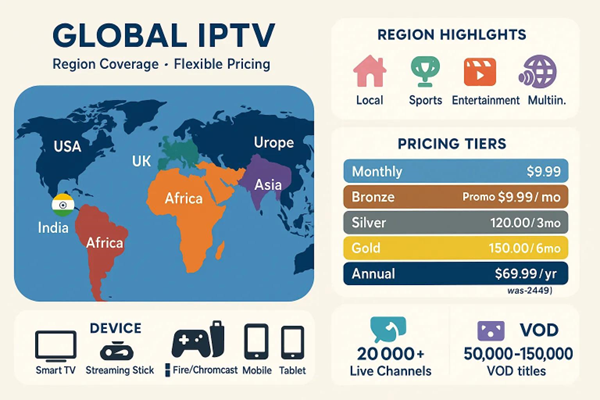
International IPTV services typically cover a wide range of countries and regions so viewers can access home-country channels or discover new programming. Common coverage includes the USA, UK, Canada, Europe, Asia, the Middle East, and Africa. Many providers also offer dedicated packages for Indian, Arabic, and other language audiences—making IPTV a useful option for expats and multilingual households who want culturally relevant channels.
What Live TV Channels Are Available by Region and Country?
Channel availability varies by region and provider. In the USA you’ll find local stations, national networks, and sports channels. The UK offers general, movie, and sports networks. Canada provides both English and French options, including children’s and local channels. Europe and Asia include broadcasters from many countries, while the Middle East and Africa offer a mix of Arabic and regional channels. The variety ensures you can find content that matches your interests and language needs.
How Do Coverage Maps Illustrate IPTV Service Availability Globally?
Coverage maps are practical tools that show where providers can legally offer specific channels. They make geographic restrictions and licensing agreements visible so you can see which channels will work in your location. Reviewing coverage maps before subscribing helps avoid surprises and ensures the service you pick matches your regional needs.
How to Compare IPTV Channel Packages and Subscription Plans Effectively?
Start by listing your viewing priorities: must-have channels, preferred languages, number of simultaneous streams, and your budget. Then compare providers on channel lineups, pricing, device limits, and extra features like catch-up or cloud DVR. Creating a comparison table helps you spot differences quickly and pick the plan that fits your daily viewing habits.
A careful comparative analysis makes it easier to weigh the trade-offs between cost, channel breadth, and streaming quality.
Comparative Analysis of IPTV Services for Subscribers
This research compares IPTV and OTT video services and uses a SWOT-style approach to show how providers are delivering IPTV options to subscribers.
Comparative Study of IPTV & OTT Video from Technical and Business Aspects., AT Alamsyah, 2025
What Are the Pricing Tiers and Benefits of Popular IPTV Subscription Plans?
IPTV pricing varies to suit different budgets and viewing needs. For example, Xtreme HD IPTV lists several plans:
| Plan Type | Monthly Price | Features |
| Monthly Plan | $9.99 | Access to over 20,000 live TV channels, movies, and TV shows on-demand. |
| Bronze Plan | $29.99 (discounted to $9.99/month) | Includes additional features and channels. |
| Silver Plan | $120.00 for 3 months ($14.99/month) | Enhanced channel selection and features. |
| Gold Plan | $150.00 for 6 months ($29.99/month) | Premium content and features. |
| Annual Plan | $69.99/year (discounted from $249) | Best value for long-term subscribers. |
These tiers typically bundle different channel counts, VOD access, and trial or support options—so match the offer to how much you watch and which channels matter most.
Which Features Differentiate the Best Global IPTV Providers?
Leading IPTV providers earn their place by offering several key strengths: a broad, high-quality content catalog; easy-to-use apps and guides; wide device compatibility; and dependable stream performance. Providers that combine crisp streams with a simple, organized interface tend to deliver the best everyday experience.
What Is the Quality and Device Compatibility of International IPTV Streaming?
Quality and device support make or break an IPTV service. Providers like Xtreme HD IPTV emphasize HD and Full HD delivery and aim for smooth playback across smartphones, smart TVs, and dedicated streaming devices. Good providers optimize streams for different devices so you can watch seamlessly whether you’re on your TV, phone, or tablet.
How Does Streaming Quality Impact User Experience Across Devices?
Streaming quality affects buffering, picture clarity, and overall enjoyment. Bandwidth, adaptive bitrate technology, and how well the app handles different devices all matter. Users with faster, stable connections usually see better performance. Checking a provider’s recommended speeds and trialing the service are practical steps to confirm it meets your expectations.
Which Devices Support HD and 4K IPTV Streaming?
Many devices now support HD and 4K IPTV streaming. Common options include:
- Smart TVs: Most modern smart TVs have apps or ways to load IPTV services.
- Streaming Devices: Amazon Firestick, Google Chromecast, and Apple TV are popular choices for IPTV apps.
- Mobile Devices: iOS and Android phones and tablets can run dedicated IPTV apps.
- Gaming Consoles: Some consoles support IPTV applications as well.
That range means you can pick the hardware that fits your setup and picture-quality goals.
What VOD Content Providers Offer Extensive Libraries in IPTV Services?
VOD libraries add huge value to IPTV by letting you watch movies and shows on your schedule. Notable providers and services that often appear in IPTV packages include:
- Xtreme HD IPTV: Known for a broad mix of live channels and VOD from 100+ countries.
- Hulu: Features originals, live TV options, and an on-demand catalog.
- Sling TV: Offers customizable channels plus on-demand content.
Combining live and on-demand content gives you flexibility and a richer viewing experience.
How Do VOD Libraries Complement Live TV Channel Lineups?
VOD libraries fill gaps when live programming isn’t airing what you want. They let you binge by genre, catch up on missed shows, and explore foreign-language films. With libraries that can range from roughly 50,000 to 150,000 titles, VOD turns an IPTV service into a flexible entertainment hub.
Which Genres and Languages Are Included in VOD Content?
VOD catalogs cover many genres and languages to serve global audiences. Common genres include:
- Drama: Character-driven series and feature films.
- Comedy: Sitcoms, stand-up, and light entertainment.
- Action: Blockbusters and adrenaline-driven series.
- Documentary: Informative, real-world stories and deep dives.
Libraries often include subtitles and dubbed options to broaden accessibility for non-English speakers.
What Do User Reviews and Testimonials Reveal About IPTV Channel Lineups and Coverage?
User reviews give a ground-level view of how services perform. Many subscribers praise large channel counts—often 20,000+ live channels—and extensive VOD collections. Positive reviews typically highlight ease of use, steady streaming, and the breadth of international channels; negative feedback commonly points to occasional outages or platform-specific bugs. Reading recent user feedback helps set realistic expectations.
How Do Customers Rate Channel Variety and Streaming Reliability?
Customers tend to rate services higher when channel variety and reliability are strong. A wide selection of local and international channels matters, but uninterrupted playback and quick support are equally important. Providers that balance both usually receive the best customer ratings.
What Are Common User Experiences with Subscription Plans?
User experiences vary by plan and personal needs, but common themes include:
- Extensive Channel Lineup: Access to 20,000+ live channels gives users many viewing options.
- On-Demand Content: Large VOD libraries supplement live programming and add flexibility.
- User-Friendly Interface: Clear navigation and search tools make content discovery faster and easier.
These factors—channel depth, perceived video quality, and an intuitive UI—often drive subscription decisions.
Factors Influencing IPTV Subscription & Content Richness
This research examines how user-perceived video quality, measured via web surveys, interacts with content richness (CR) and interactivity (IA), and how these elements influence subscription choices.
Influencing factors on the IPTV subscription: Focused on the moderation role of user perceived video quality, S Kang, 2016
Frequently Asked Questions
What are the advantages of using IPTV over traditional cable services?
IPTV offers flexibility, a wider international channel selection, and on-demand viewing. You can stream on multiple devices and often access channels not offered by local cable—useful for expats or multilingual households. That combination of choice and convenience is a major reason many users switch to IPTV.
How can I troubleshoot common IPTV streaming issues?
Start with the basics: check your internet connection and run a speed test, restart your router, and clear the app cache. If problems persist, confirm the provider isn’t experiencing outages via their website or social channels. For ongoing issues, contact the provider’s support with device and error details so they can diagnose the problem.
Are there any legal considerations when using IPTV services?
Yes. Make sure your IPTV provider has proper distribution rights and complies with copyright law. Some services may offer pirated content, which can carry legal risks. Research providers carefully and choose reputable services that hold the necessary licenses for the channels they offer.
What should I look for in terms of customer support from IPTV providers?
Good support includes multiple contact channels (live chat, email, phone), clear help documentation, and reasonable availability during peak viewing hours. Check user reviews for responsiveness and helpfulness—fast, effective support makes a big difference when you run into issues.
Can I use IPTV services while traveling abroad?
Traveling can introduce location-based restrictions. Some users rely on VPNs to access home-country channels, but that may violate a provider’s terms of service. Check your IPTV provider’s policies and local regulations before using VPNs to avoid potential issues.
What are the typical internet speed requirements for optimal IPTV streaming?
Recommended speeds vary by quality: roughly 3 Mbps for SD, 5–10 Mbps for HD, and 25 Mbps or more for 4K. If multiple people stream simultaneously, plan for higher bandwidth. Running a speed test helps confirm your connection can handle your desired quality level.
How do I cancel my IPTV subscription if I no longer need it?
Cancellation procedures differ by provider but usually happen through your account settings under “Manage Subscription” or “Billing.” If you can’t find the option, reach out to customer support. Always confirm cancellations with a written confirmation to avoid unexpected charges.
Which IPTV Provider Offers the Best International Channels?
“Best” depends on your priorities—channel selection, language support, stream quality, or price. Providers that combine broad international lineups, reliable streams, and user-friendly apps typically rank highest. Read recent reviews and compare features to find the provider that fits your needs.
How Can I Evaluate IPTV Services for My Region?
Focus on three things:
- Viewing Priorities: Decide which channels and content matter most.
- Channel Selection: Compare lineups to ensure the channels you need are included.
- Quality and Stability: Look at user feedback and technical specs for stream reliability in your area.
These steps help you pick an IPTV provider that matches your regional availability and viewing habits.
Conclusion
Picking the right IPTV service gives you broader access to international channels and on-demand content that match your viewing habits. By comparing channel lineups, pricing tiers, device compatibility, and streaming quality, you can choose a plan that fits your needs. Start by mapping your priorities, check coverage maps, and trial the services that look best—then enjoy a richer, more flexible entertainment experience.
In the digital age, the way we consume television and media has undergone a significant transformation, and Internet Protocol Television Read more

The landscape of the streaming industry has changed dramatically in recent years, with several players vying for dominance. Typhoon IPTV Read more

How to jailbreak a Chromebook? Chromebooks have gained popularity as lightweight, efficient, and affordable devices that provide seamless integration with Read more

Kemo IPTV is a popular IPTV service provider that delivers television programs and other video content to your device. The Read more